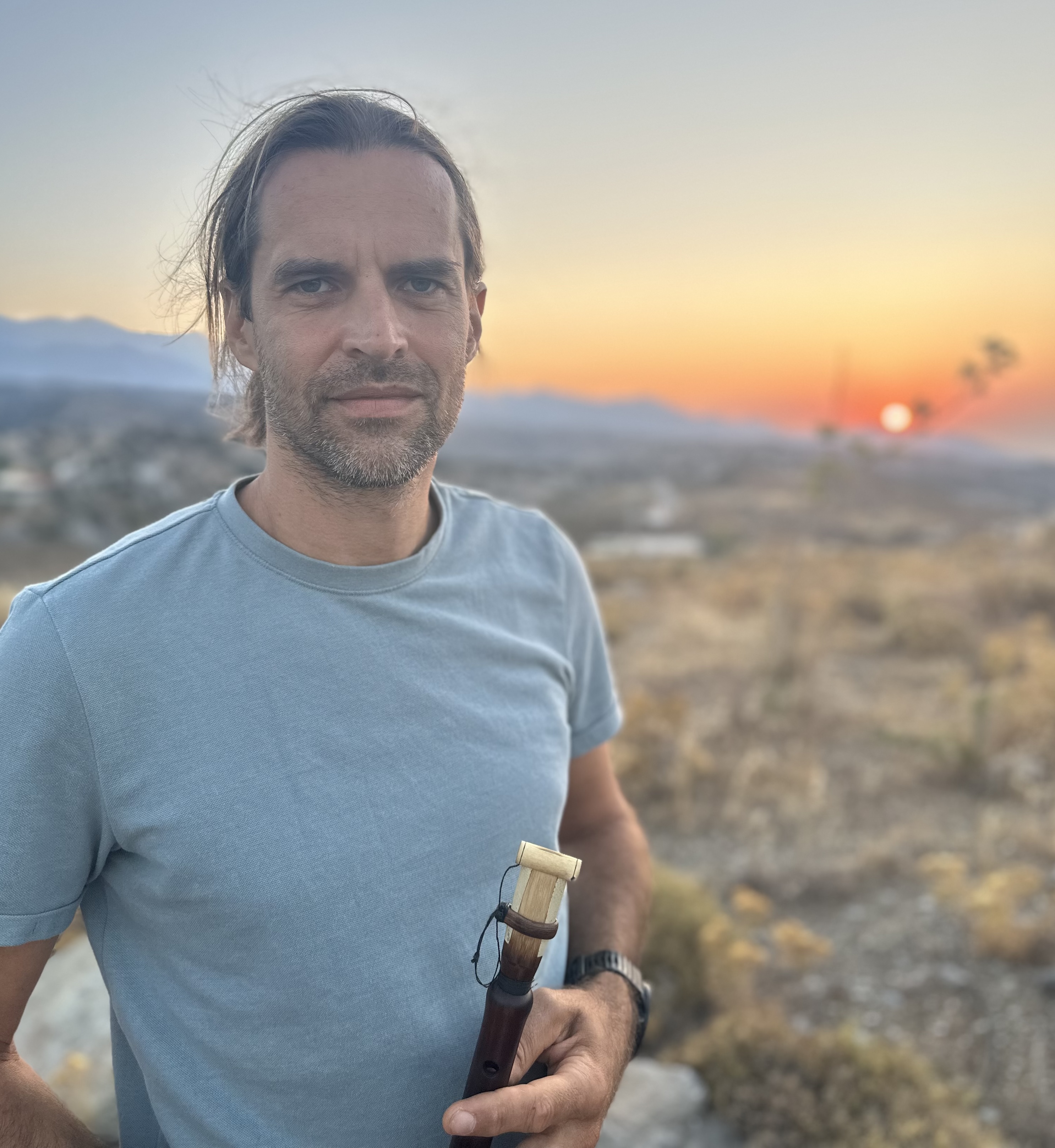
Duduk and Arabic lute
A fascination with the modal music of the Orient—with its traditional instruments, unusual sound colors, and rich ornamentation—led me to the Armenian duduk.I first heard its deeply melancholic tone in a film, long before I knew what the instrument looked like or even what it was called.
In 2015, I began studying the duduk with Armenian virtuoso Tigran Aleksanyan, who became not only my teacher but also a close friend. Through him, I discovered the world of traditional Armenian music, the old songs of the ashugh, and the deep poetry hidden within this instrument—an instrument that is both technically and expressively demanding.
Qani Vur Jan Im
Armenia has a long tradition of ashugs – itinerant poets and musicians who composed and performed songs about love, longing, life and human emotions. By bringing poetry and music together, they played an important role in preserving and developing the cultural heritage of the Caucasus.
The best-known figure in this tradition was Sayat-Nova (1712–1795), an Armenian poet, composer and singer, regarded as one of the greatest ashugs in Armenian history. His works, written in several Caucasian languages, are distinguished by their poetic depth and distinctive musical language.
Qani Vur Jan Im is one of his compositions, for which Sayat-Nova wrote both the lyrics and the melody. The song is a beautiful example of the emotional richness of the ashug musical tradition.
In this video, I perform the song together with my teacher Tigran Aleksanyan. The recording was made in Crete, and the video was filmed by Stephan Talneau.
Kele Kele
Kele Kele is an Armenian folk song documented and arranged by Komitas Vardapet (1869–1935), an influential Armenian composer, ethnomusicologist and collector of folk music. His lifelong work helped preserve the richness of Armenian musical tradition.
The recording was made in Crete, and the video was filmed by Stephan Talneau.